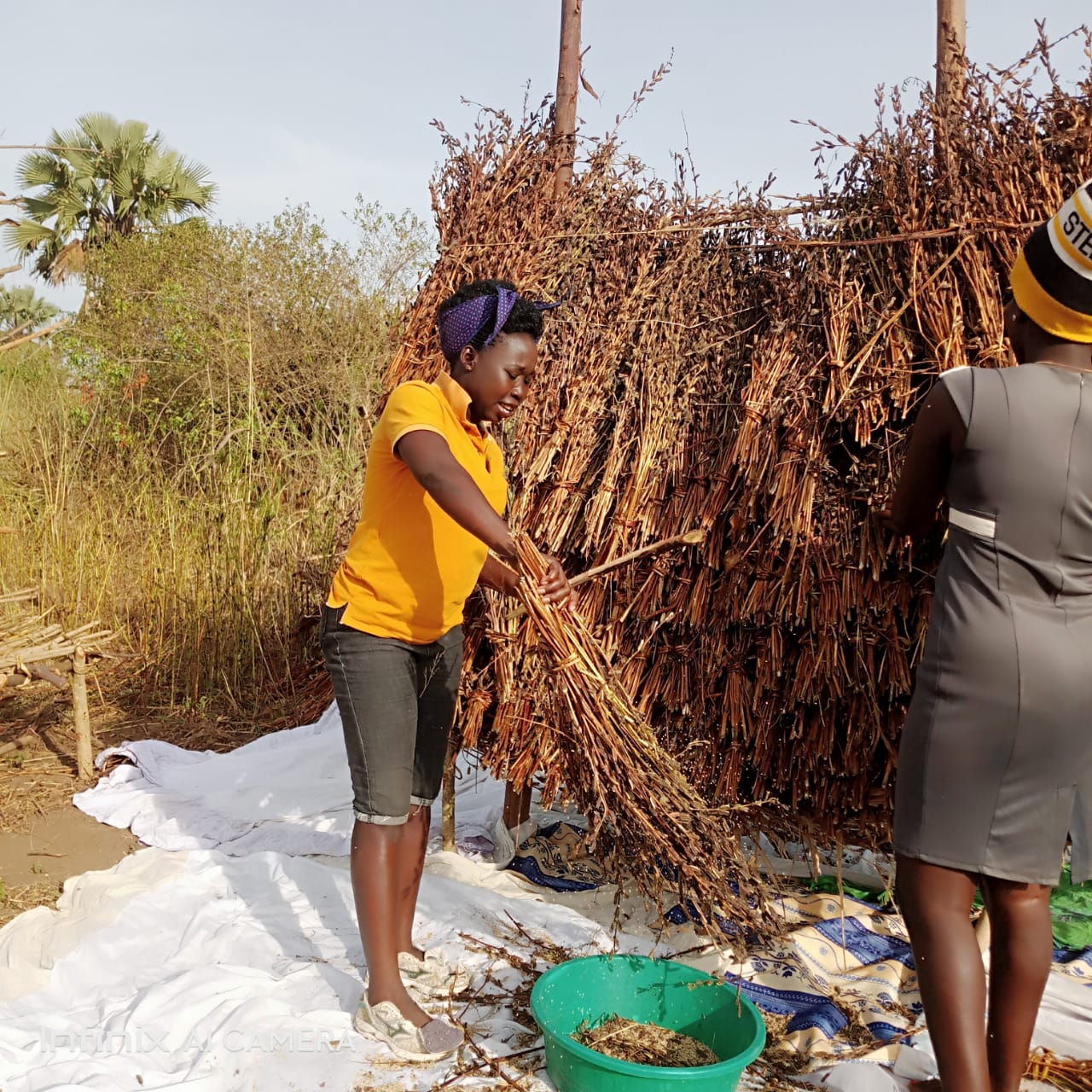
- The Asst.Managing Director GAO-UG Limited Miss Susan Adongo Practically teach farmers on Post Harvest Handling of simsim, she is passionate about her career and her dream is to curb food insecurity in Northern Uganda
Post-harvest practices of Simsim
Threshing: On a tarpaulin or clean concrete floor, or mixed with cow dung blended with oil, step on or gently beat the dried stacks to separate the sesame seeds from the pods.
Winnowing: Winnow the threshed sesame seeds in the wind or use a sieve to remove small pieces of stalk, chaff, impurities, and pests in sesame seeds. Repeated winnowing removes more and more impurities, resulting in clean sesame grains.
Storage
Store dried sesame grains in moisture-free conditions in a well-ventilated room with a concrete floor. The room should be constructed in a way that protects sesame grains from insects and other pests like rodents.
Sesame storage facilities should not contain chemicals because of possible contamination.
To prevent contamination, sesame storage bags should preferably be new, clean, and undamaged.
Place sesame bags on pallets to reduce the impact of moisture, which favours attacks by fungi and bacteria.
Typical sesame storage bags hold up to 100 kilograms of grains.
Before placing in long-term storage, ensure that sesame grains have a moisture content of 6-7%.
If pests are detected in the storage area, fumigate with chemicals such as phosphine.
Make sure to leave spaces between stacked storage bags to ensure aeration and stop spoilage.
Use only those insecticides which are registered in your country for storing seeds.